Dreadmoor Gameplay: What You Actually Do
Dreadmoor gameplay explained: the first-person expedition loop, tactile fishing and crafting, real-time combat, and what preview builds actually showed.
Last updated: September 30, 2026
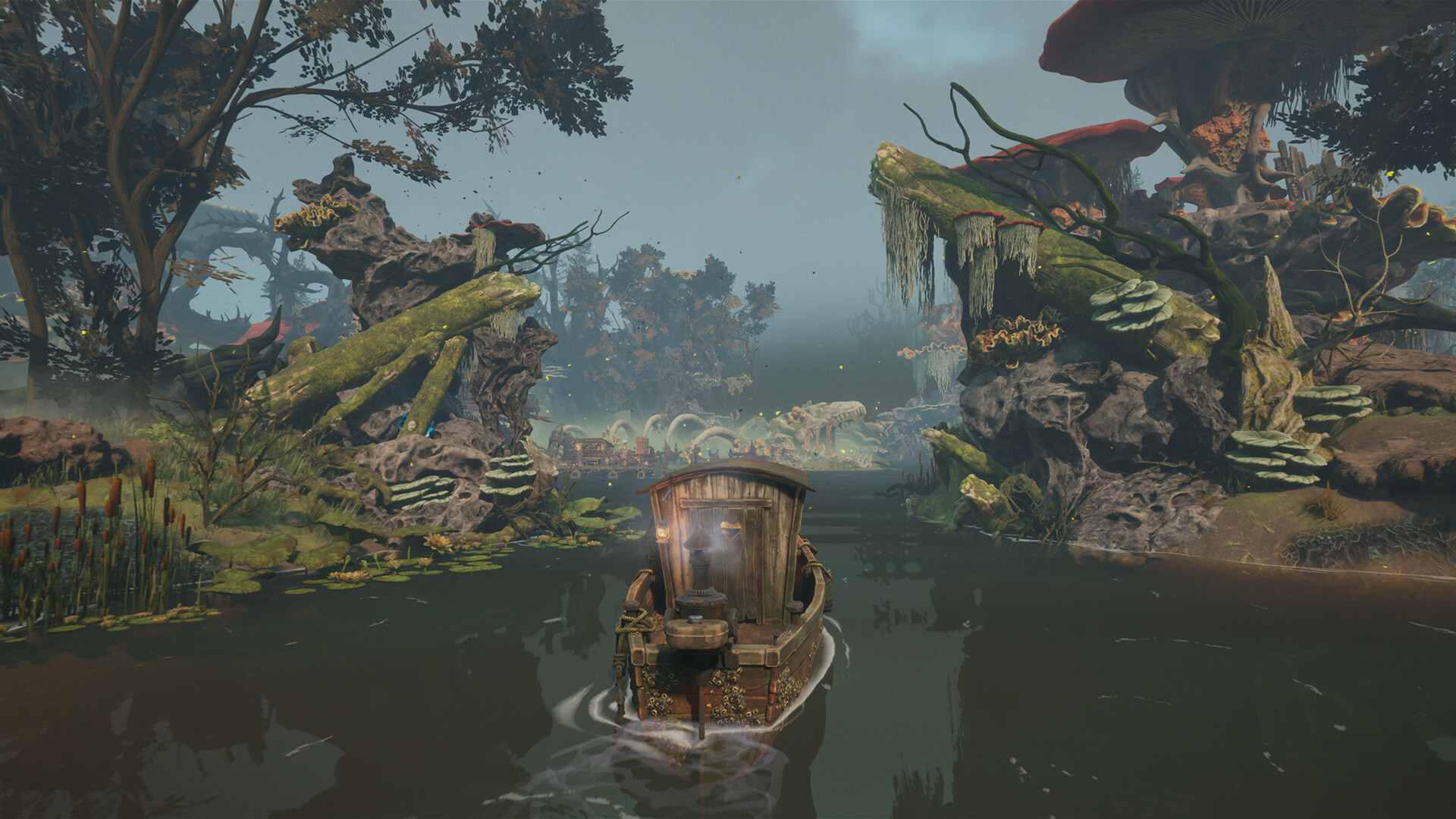
Dreadmoor gameplay is first-person and tactile: you are the fisher, not a camera above the boat. An expedition means sailing your trawler out, working fishing spots by hand, scavenging on foot, hauling the catch home through water that gets hostile after dark — and spending everything you earned on the gear that lets you push farther next time. Here is what is officially confirmed, plus what hands-on preview builds added.
The expedition loop
Official material chains the same systems together on every trip:
- Prepare — the official gameplay description advises stocking bait, harpoons, and health kits before you leave.
- Sail the trawler to fishing spots and salvage sites across the semi-open Submerged Lands.
- Fish — the heart of the game: a first-person, skill-based minigame (below).
- Scavenge ruins, caves, and wrecks on foot for scrap, blueprints, and supplies.
- Process and trade — sell the catch at settlements, or process it into materials.
- Craft and upgrade — bait, harpoons, medicines, tools; the trawler itself upgrades at a dry dock.
- Survive the way home — real-time combat, night danger, and one hard rule: if your ship is destroyed, your catch goes down with it.
That last rule shapes every decision. Storage, hull armour, and the lantern are not cosmetics — they are how much of a trip you keep.
How fishing actually plays
The developer FAQ describes fishing as first-person and skill-based, built around fish stamina and line tension, with quick-time events at key moments. Hands-on previews add the texture: you cast out at a distance, wiggle the hook to entice a bite, then hold to reel while steering the rod against where the fish runs — giving slack when the line tension climbs. Bigger fish fight meaningfully harder.
Two systems feed the minigame: bait choice affects what bites (with a bait-selection screen stating it affects catch chance), and a Fishing Skill Tree unlocks new bait and lures — the full loop lives in the fishing guide and bait guide.
Everything is a physical action
The single most consistent note from every preview build (GDC, PAX East, Summer Game Fest 2026): the world is hands-on. Previews describe reeling in floating scrap with a Grappling Hook Gun, repairing the boat with timed button presses, physically dragging a fuel nozzle to refuel, tuning the ship's radio dial by dial, and crafting at a workbench where a recipe book tells you which ingredients to drag where. Nothing important is a menu.
These impressions come from preview builds — the October 6, 2026 demo is the first build you can verify against, and our beginner guide will be re-checked against it the day it lands.
Combat, night, and losing the boat
Combat is real time, on sea and on land: melee weapons (an axe is the first confirmed), ranged tools like the Harpoon Launcher, and the trawler's defensive modules — with boss-level creatures in the depths described as "by far the most valuable if you manage to bring them in." Night is when the water turns properly hostile, and the world punishes carelessness in documented ways (going overboard has been fatal in every build shown so far). The full picture is in weapons & combat.
Progression: two skill trees, one currency
Official material confirms a Fishing Skill Tree and a Ship Upgrade Skill Tree, funded by torn pages found while exploring — pages unlock bait recipes on one tree and hull, storage, engine, and lantern upgrades on the other. Exact costs are unpublished; the confirmed upgrade list lives in the crafting & upgrades overview.
Dreadmoor gameplay FAQ
Is Dreadmoor first person?
Yes — that is the defining difference from Dredge. You are the fisher: casting, reeling, crafting, fueling, and fighting all happen in first person.
What do you do in Dreadmoor?
You run a fishing expedition loop: prepare, sail, fish, scavenge, trade, craft, upgrade, and survive the trip home — with a storyline and hand-crafted quests threaded through the semi-open world.
Does Dreadmoor have combat?
Yes — real-time combat on sea and land: melee weapons, ranged tools, ship defenses, and boss-level creatures in the depths.
Is there a fishing minigame?
Yes — casting, enticing the hook, reeling against fish stamina and line tension, with quick-time events at key moments. Bait choice and skill-tree unlocks change the results.
Is Dreadmoor gameplay like Dredge?
Same genre, different camera and density: Dredge abstracts the work behind a boat; Dreadmoor makes every step physical in first person. The point-by-point comparison is in the Dredge comparison.
Where can I see Dreadmoor gameplay?
Official trailers and screenshots are on the Steam page, and hands-on previews from GDC, PAX East, and Summer Game Fest describe it in detail — but the free demo on October 6, 2026 is the first build you can play yourself.
Related: game overview · fishing guide · beginner guide.